
Volatility Kings? is our list of companies having a tendency to experience increasing options implied volatility as their quarterly reporting dates approach. The increasing implied volatility reflects uncertainty or the width of the possible stock price distribution on the report date. While these companies have experienced increasing implied volatility when they previously reported, the level of uncertainty for the current report may not be comparable. Indeed, some companies are on the list one quarter and not the next while others seem to remain quarter after quarter. Since the focus is on earnings, others such as those with high-implied volatility due to takeover speculation or FDA announcement dates are excluded along with low options volume ones.
Before getting started, we have a brief strategy review.
Strategy
S&P 500 Index (SPX)
As we commented last week, the media celebration about the new high was premature since it became a selling target especially in this month of April with its recent record as a month of market declines. From a technical perspective there are several possibilities including a rising wedge and perhaps even a developing Head & Shoulder Top pattern.
Looking at our indicators, we see the “risk off” favorites that were so ubiquitous last year, including declining Treasury note and bond interest rates, copper, crude oil, corn and the transports. In addition, our market breadth measure made its largest weekly decline since last November 16, which is not encouraging for the bulls.
Last week, we offered a conditional hedge idea using May VIX options in the event SPX closed below the March 19 low of 1538.57. Friday the low was 1539.50 but it turned higher to close back above 1550 so the plan remained suspended. After Friday?s employment report the chances have greatly increased we will shortly see the 1538.57 exceeded on a closing basis. In that event, here is the synthetic long idea again.
?
Now for our Volatility Kings Master list follow by those with April reporting dates.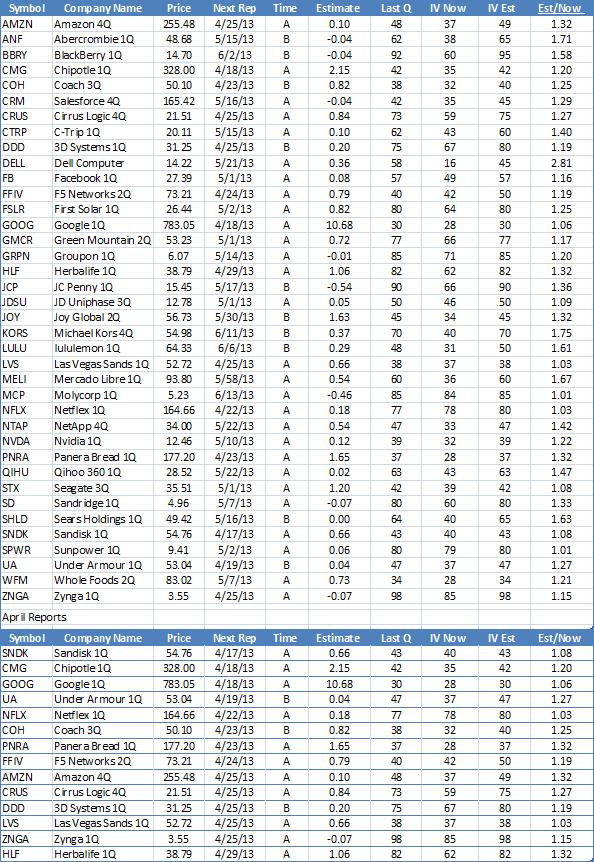 ?
?
Price in column 3 are closing prices Friday April 5.
Next Rep in column 4 is the next expected reporting date as of Friday. Check these dates as they are estimates and the companies routinely change them. Time in column 5 is when during the day to expect the report, where B is before the open and A is after close.
Estimate is the current consensus earnings estimate.
Last Q is the implied volatility index mean, IVXM reached before the last quarterly report, but may not be relevant this quarter, especially since market implied volatility as measured by the VIX is lower than in previous quarters.
IV Now is the implied volatility index mean, IVXM on Friday.
IV Est is the implied volatility index mean, IVXM estimate for the upcoming report date based mostly on the previous quarters maximum.
Est/Now is the ratio of the estimated implied volatility to the current implied volatility. Those with higher ratios have a potentially greater opportunity to increase going into their report date. Since the market implied volatility as measured by the VIX is lower than in previous periods, many of the ratios are also lower this quarter. By this measure PNRA, AMZN, and HLF have the most April potential.
Comments and Observations
Most implied volatilities are now rising after reaching lows within the last two weeks.
For those that have recently reported such as BBRY implied volatility is still declining. The typical pattern is to decline about 9-10 weeks after reporting followed by a subsequent rise about 2-3 weeks before the next report date, but they vary and each has its own pattern.
Comparing with our last list in January, some deletions were due to options volume declines below our lower limit such as Avon Products (AVP). Others because implied volatility is no longer increasing before the earnings reports, such as KB Home (KBH), McDermott (MDR), Pulte Group (PHM).
Some may be high now for reasons unrelated to upcoming earnings reports, such as Netflix (NFLX). Along the same line, the current implied volatility of Dell Computer (DELL) is abnormally low due to the ongoing news about going private, making the Est/Now ratio abnormally high.
Not surprisingly those with be best ratios are the ones that will be reporting at later dates since they may still be declining after recently reporting, such as Abercrombie (ANF) or NetApp (NTAP).
Some experience predictable declines after reporting such as SanDisk (SNDK) having gone from 43 to 26 although it is now back at 40 so the ratio of 1.08 does not tell the entire story and needs checking regularly.